Impossible Mission from a Website Inquiry
An "Impossible Mission" from a Website Inquiry: Teliang Breaks Industry Limits
"Excuse me, do you have M4 threaded PCB solder terminals? I need the torque to reach 3N·m, and the height must be controlled within 10mm." Recently, a customer who initiated an inquiry through Teliang's official website www.duanzitai.com walked into Teliang's reception room with such a demand. These words shocked the technicians present—the combination of these two indicators is almost a "no man's land" in the industry.
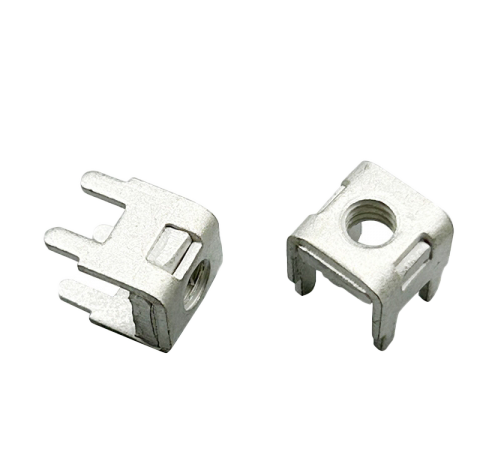
The customer is engaged in the research and development of industrial control equipment. Their new product has highly integrated internal space, which imposes strict dimensional limits on the PCB terminals. The high torque requirement of 3N·m is to ensure the connection reliability of the equipment in a vibration environment. According to industry data, the conventional torque range of M4 threaded PCB terminal blocks is only 1.0-1.5N·m, and 3N·m has reached the ultimate load-bearing standard of stainless steel. Meanwhile, the height of mainstream PCB solder terminals on the market is generally 12-15mm. Even for international brand products known for compact design, the minimum height requires 10.21mm. The customer admitted that he had consulted more than ten suppliers at home and abroad, all of whom refused because "high torque and low height are incompatible."
Accumulation of Thousands of Models Cracks the Industry Dilemma
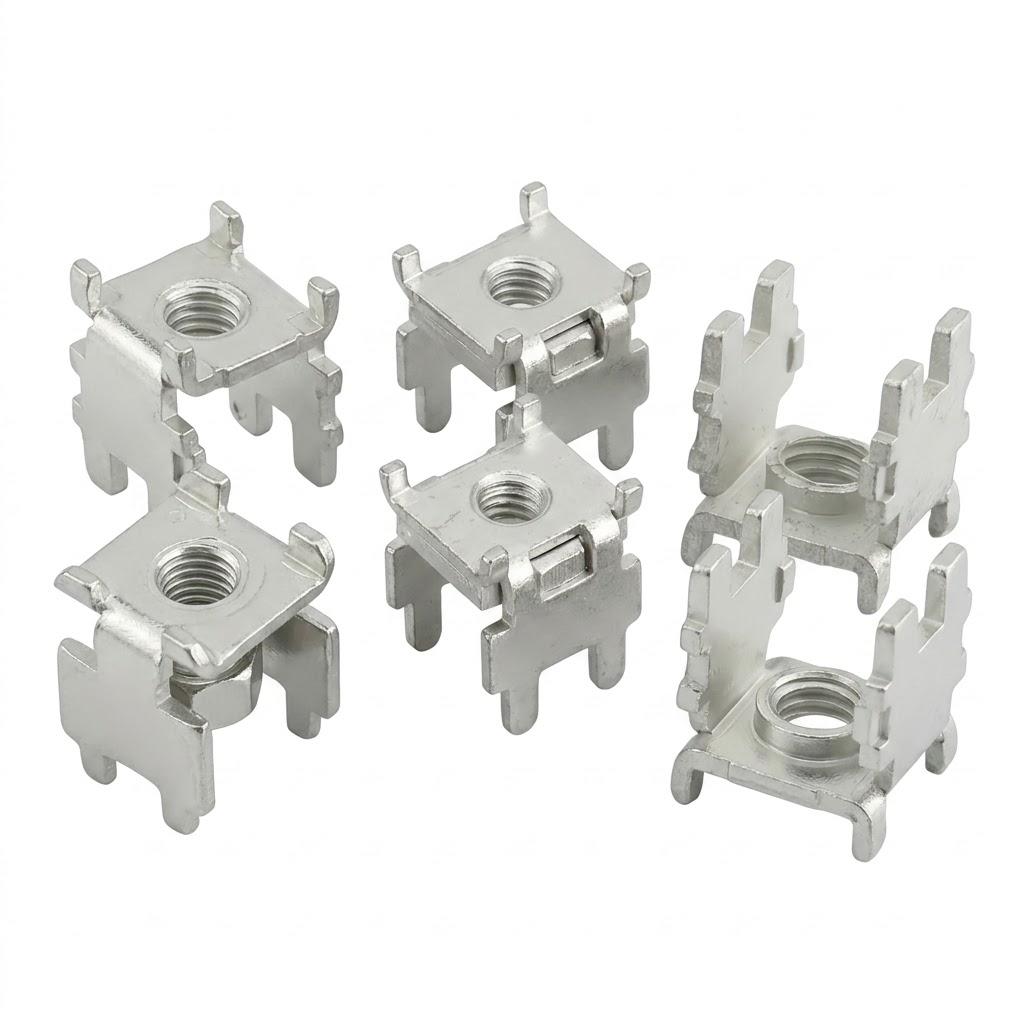
Facing this seemingly unsolvable problem, the Teliang technical team did not flinch. As an industry player with more than 1,000 types of PCB terminal models, Teliang's product matrix covers all-scenario needs from conventional standard parts to special customized parts, which laid a solid foundation for this technical breakthrough.
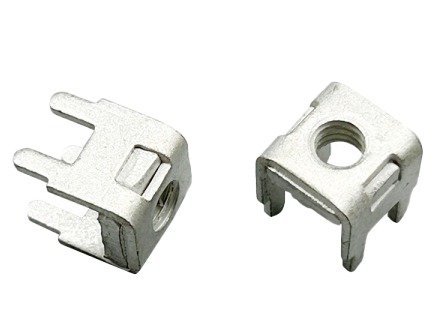
The technical team quickly launched a special task force and screened 3 horizontal terminals with heights close to 10mm from thousands of models as basic prototypes. The core challenge was: to increase the torque to 3N·m without increasing the product height, while ensuring welding reliability. Under conventional thinking, increasing torque requires thickening the thread or increasing the meshing length, which inevitably leads to exceeding the height limit. To this end, the team adopted a dual innovation scheme: In terms of materials, high-strength copper-chromium-zirconium (CuCrZr) alloy was selected to replace traditional brass. After vacuum heat treatment, the strength increased by 40%, allowing it to withstand greater locking force without deformation. In terms of structure, the thread profile design was optimized, using a fine-thread structure to increase the number of effective meshing teeth. At the same time, the soldering pins were changed to an L-type embedded design, compressing the overall height by 2.3mm without affecting the soldering area.
After 72 consecutive hours of simulation testing and sample trial production, the first qualified sample was born: the height was precisely controlled at 9.8mm, the M4 thread showed no slipping after being locked 50 times under 3N·m torque, and the contact resistance remained stable below 0.03mΩ, fully meeting the customer's technical requirements. When the customer witnessed the sample pass the dual verification of the torque tester and the height gauge, he couldn't help but praise: "I didn't expect Teliang could really turn the 'impossible' into 'possible'!"
Customization Capability Highlights Core Competitiveness
This successful breakthrough was not accidental. For many years, Teliang has always adhered to the development strategy of "taking thousands of models as the cornerstone and customized innovation as the engine." Its matrix of 1000+ models not only covers different thread specifications, current levels, and installation methods but also accumulates a rich structural design database. For the personalized needs of customers, Teliang can quickly call up the technical parameters of similar models for modular reorganization and optimization, significantly shortening the R&D cycle.
According to Teliang's Technical Director, in the field of compact PCB design, the contradiction between height restriction and performance improvement is increasingly prominent. This technical breakthrough for M4 terminal blocks not only solved the problem for a single customer but also formed a replicable customized solution. By upgrading materials and optimizing structures, this solution fills the industry gap by ensuring a high torque of 3N·m while keeping the height below 10mm. Currently, this custom terminal has passed IEC 60999-1 standard certification and can be widely used in industrial control, new energy equipment, and other scenarios with extremely high requirements for space and reliability.
The achievement of this cooperation once again confirms Teliang's business philosophy of "customer demand-oriented, technical innovation as the core." From the website inquiry to sample delivery, the efficient response in just 15 days not only demonstrated the flexible adaptation capability of the thousand-model matrix but also highlighted Teliang's technical accumulation in the field of PCB terminals. In the future, Teliang will continue to deepen customized services, use richer product models and more exquisite technical solutions to solve various connection problems for global customers, and let "Intelligent Manufacturing in China" terminal products shine in more high-end scenarios.
Teliang Leads the New Track of Terminal Blocks
Exhibition as a Bridge Technology as a Medium
Related Article