How to Use a Terminal Blocks
Cable-to-Terminal Connection Standards: A Comprehensive Guide to the Copper Lug Crimping Process
Instead of fast food fashion concept, vetiver is based on the idea of the wearer, not limited to the scope of age or season. At every time of the day, every region and every place can freely change and connect smoothly. Vetiver skillfully combines leisure style and soft multi-functional materials to create a clothing piece valued by fearless and confidentInstead of fast food fashion concept, vetiver is based on the idea of the wearer, not limited to the scope of age or season. At every time of the day, every region and every place can freely change and connect smoothly. Vetiver skillfully combines leisure style and soft multi-functional materials to create a clothing piece valued by fearless and confidentInstead of fast food fashion concept, vetiver is based on the idea of the wearer, not limited to the scope of age or season. At every time of the day, every region and every place can freely change and connect smoothly. Vetiver skillfully combines leisure style and soft multi-functional materials to create a clothing piece valued by fearless and confident women.
Our take on the modern prairie dress, the sweet Vetiver dress has a v-
Instead of fast food fashion concept, vetiver is based on the idea of the wearer, not limited to the scope of age or season. At every time of the day, every region and every place can freely change and connect smoothly. Vetiver skillfully combines leisure style and soft multi-functional materials to create a clothing piece valued by fearless and confident women.
Our take on the modern prairie dress, the sweet Vetiver dress has a v-neckline, fitted bodice, and puff sleeves with 3/4 length smocked cuffs. The romantic sleeves are beautifully complimented by the ruffled tier finishing the hem. She is oh so perfect for summertime picnics or just frolicking in the dappled sunshine.
I. The Core of the Standards: Mandatory Industry Requirements for Copper Lug Crimping
Eliminating the Hazard of Stray Strands in Multi-Strand Cables: When flexible multi-strand copper wires are connected directly to a terminal, individual fine strands can easily fray or protrude, leading to uneven force distribution. Under conditions involving equipment vibration or thermal expansion and contraction, these connections are highly prone to loosening, which can trigger electrical arcing and result in terminal ablation or even fire. The copper lug resolves this issue by utilizing a cold-crimping process to consolidate the loose strands into a cohesive unit, thereby forming a stable, conductive joint.
Reducing Contact Resistance: The contact interface between a bare wire and a terminal typically constitutes a "point contact." Under high-current loads, the contact resistance at such an interface rises sharply, leading to localized overheating. Conversely, the crimping of a copper lug creates a "surface contact." When paired with high-conductivity copper alloy terminals—such as those offered by Telian—the contact resistance can be reliably maintained below 0.03 mΩ, thereby meeting the requirements stipulated in the IEC 61238-1 standard.
Enhancing Mechanical Strength and Vibration Resistance: Environments such as industrial facilities and outdoor photovoltaic power stations are frequently subject to continuous vibration. In such settings, connections made with bare wires are highly susceptible to loosening caused by mechanical stress. Following the crimping of copper lugs, the tensile strength of the connection increases by 3 to 5 times. When paired with specialized reinforced threaded terminals, the assembly can withstand a torque of 12 lbf·in without displacement, thereby meeting the vibration resistance testing standards outlined in GB/T 20638-2006.
Meets Rigorous Engineering Acceptance Criteria: In both domestic and international engineering projects—such as government-led new energy initiatives in Turkey and photovoltaic power stations in Australia—supervisory acceptance protocols explicitly designate the proper crimping of copper lugs as a mandatory inspection item. Connections lacking standardized crimping are deemed non-compliant construction work, directly jeopardizing project handover.
II. Guidelines for Selecting Copper Lugs: Compatibility is the Prerequisite
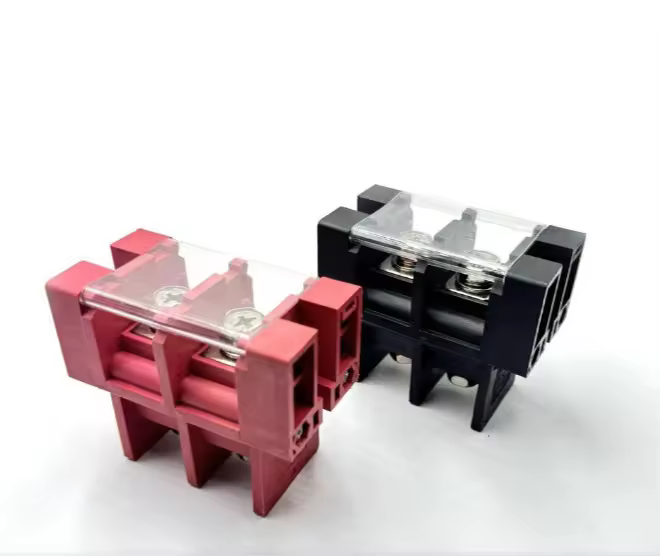
The selection of copper lugs must adhere to the "Three-Way Matching" principle: the cable cross-section must match the copper lug specifications; the copper lug material must match the cable material; and the crimping method must match the specific application environment.(II) Material Selection Requirements
Copper lugs must be manufactured from high-purity electrolytic copper (with a copper content of ≥99.9%). The use of brass or recycled copper is strictly prohibited to ensure optimal electrical conductivity and ductility.
For outdoor, high-humidity, or salt-spray environments, tin-plated or silver-plated copper lugs must be selected. The plating thickness must be ≥3μm to satisfy the requirement of exhibiting no corrosion after a 96-hour salt-spray test (in compliance with the ASTM B152 standard).
Insulated copper lugs must utilize PVC or silicone rubber materials with a flame-retardant rating of UL94 V-0, ensuring suitability for operation within a wide temperature range of -40°C to 125°C.
III. Standard Crimping Process: Four Steps to a Compliant Connection
Cable Preparation: Strip the insulation layer according to the barrel length of the copper lug. The exposed length of the copper core must match the barrel length exactly, with a tolerance of ≤ ±1mm. It is strictly forbidden to damage the fine strands of the copper core during the stripping process.
Cleaning: Use sandpaper to abrade the oxide layer on the surface of the copper core, and wipe the inner wall of the copper lug with anhydrous ethanol to ensure the contact surfaces are free of oil, oxides, and dust.
Tool Preparation: Select a crimping tool that matches the specifications of the copper lug. Calibrate the crimping dies to ensure uniform crimping pressure (Standard Pressure: ≥ 8 MPa for 16mm² cables; ≥ 12 MPa for 50mm² cables).
Safety Precautions: Before commencing work, the power supply must be disconnected and verified as de-energized. Wear insulated gloves and safety goggles to prevent injury from flying metal debris during crimping.
Heat-shrink tubing must be applied over the crimped connection. The length of the heat-shrink tubing must cover the barrel of the copper lug as well as an additional 10 mm of the cable's insulation layer on both ends. Use a heat gun to apply uniform heat, ensuring the tubing shrinks tightly and fits snugly against the cable without any air bubbles.
For outdoor or humid environments, waterproof insulation tape must be wrapped around both ends of the heat-shrink tubing to provide a dual layer of protection.
Labeling: Mark the cable number and the crimping date directly on the copper lug or the heat-shrink tubing to facilitate traceability during future operation and maintenance.
IV. Terminal Connection Standards: Key Requirements for Final Connection
Connection Procedure: Align the cable (with the crimped copper lug attached) with the terminal's connection port. Ensure that the flat surface of the copper lug makes full contact with the conductive surface of the terminal, with no tilting or misalignment.
Tightening Requirements: Use a torque wrench to tighten the screws according to the terminal's specified torque rating (Common specifications: M6 screws at 8–10 N·m; M8 screws at 12–15 N·m). Overtightening—which could result in stripped threads or a cracked terminal—is strictly prohibited.
Verification and Testing: Upon completion of the connection, use a multimeter to measure the contact resistance; the reading should be ≤ 0.05 mΩ. After a 24-hour powered test run, use an infrared thermometer to measure the temperature of the connection joint; the temperature rise should be ≤ 30 K (relative to an ambient temperature of 25°C), with no signs of abnormal overheating. V. Common Improper Practices and Risk Warnings
Failure to Match Copper Lugs to Specifications: Using undersized copper lugs on oversized cables results in compressive damage to the conductor after crimping, making it prone to burn-out under high-current loads.
Direct Connection of Bare Wires to Terminals: Exposed strands of multi-strand wire can cause short circuits; furthermore, connections may loosen due to vibration, leading to electrical arcing—a failure mode that previously caused a cabinet fire at an energy storage project in Turkey.
Use of Substandard Crimping Tools: Using ordinary pliers for crimping results in insufficient pressure and excessive contact resistance; in one instance, a connection overheated and melted after just six months of operation.
Omission of Insulation Protection: In outdoor environments, exposed copper lugs are susceptible to oxidation and corrosion, leading to poor contact within a short period and disrupting the normal operation of the equipment.
VI. Ensuring Compliance: Support from Telian’s Compliant Products
The conductive core is constructed from 99.95% high-purity copper alloy with a silver-plated surface treatment; when properly crimped with a copper lug, the contact resistance remains ≤0.03 mΩ.
The terminal screws are made of high-strength alloy material with reinforced threads, capable of withstanding a torque of 15 N·m without stripping, thereby meeting the rigorous fastening requirements of high-current circuits.
Customization services are available, offering tailored recommendations for matching copper lugs based on specific cable specifications and terminal models, along with accompanying technical guidance on the proper crimping process.
The entire product series holds UL, CE, and RoHS certifications and complies with international and domestic standards (such as GB and IEC), ensuring full regulatory compliance for project acceptance.
Conclusion
While the connection between cables and terminal blocks may appear simple, it serves as the "lifeline" for the safe operation of any electrical system. As a mandatory industry standard, the copper lug crimping process is the core method for mitigating hidden hazards associated with high-current and heavy-gauge cable connections. During project construction, it is imperative to strictly adhere to four key principles: "Proper Selection and Matching," "Standardized Crimping," "Compliant Interfacing," and "Comprehensive Protection." Only by following these guidelines can one effectively eliminate the root causes of faults such as overheating, loosening, and short circuits. Telian Electronics remains steadfastly guided by industry standards, providing high-quality terminal products and professional technical support to help global new energy and industrial control projects achieve safe, stable, and reliable operation.
how to wire the terminal block
What Exactly Do Terminal Blocks Do
Related Article