How PCB Solder Terminals Support Modern Power Systems
Global Business Partnership
Clark
Director of Global Partnerships
Leading Power
Connection Tech
A Reliable “Bridge” under High Current: How PCB Solder Terminals Support Modern Power Systems
In fields such as new - energy vehicles, energy - storage power stations, and industrial power supplies, “high current” is no longer an abstract technical indicator but a core test for the safe operation of equipment. When a power battery pack completes charging and discharging with a current of hundreds of amperes, when an industrial frequency converter drives a high - power motor to operate, and when an energy - storage cabinet transmits megawatt - level electrical energy to the power grid, the terminal blocks connecting the PCB and external cables become the “throat” bearing all of this. Issues such as heat generation, loosening, and insufficient space of traditional connectors under high - current conditions have long been pain points in the industry. However, PCB solder terminals, with their unique structural and material advantages, are becoming the key solution to this problem.
I. The Real - world Dilemma in High - Current Scenarios: Common Challenges from BMS to Industrial Power Supplies
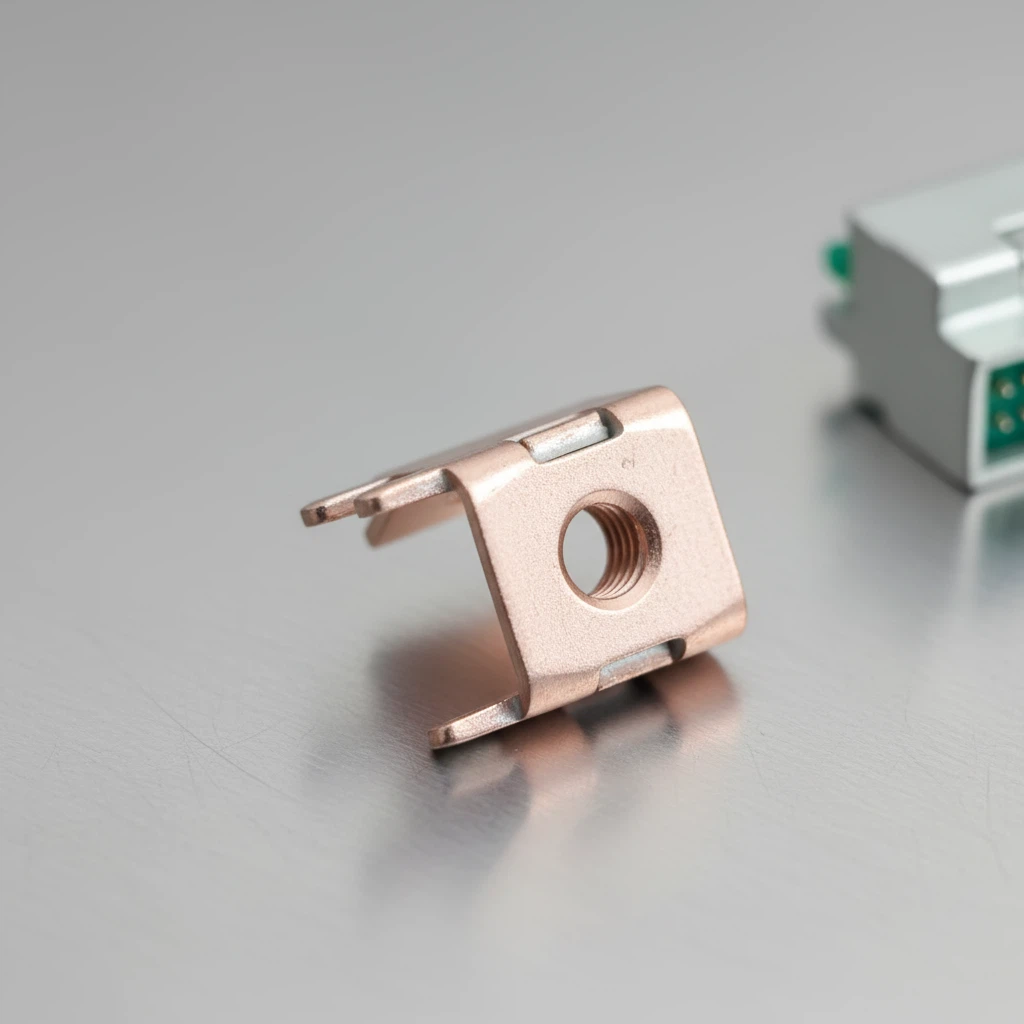
On the BMS main control board of a new - energy vehicle, a PCB the size of a palm needs to carry dozens of circuits such as cell sampling, power control, and communication transmission. The current in the main charging and discharging circuit can reach 50A - 150A. Under such working conditions, traditional plug - in terminals often have excessive temperature rise due to high contact resistance, and there is even a risk of the plastic housing melting and the wire being ablated. On the control board of an industrial frequency converter, high - current terminals need to withstand the impact current during motor startup for a long time. Problems such as spring fatigue and screw loosening of ordinary terminals directly lead to equipment shutdown for maintenance.
The scenarios in energy - storage power stations are even more severe. The connection terminals between the battery clusters and the PCS (power conversion system) need to carry a continuous current of hundreds of amperes, while also coping with the severe vibration during transportation and the temperature fluctuations in outdoor environments. Once the terminals have poor contact, it will not only cause energy loss but may also lead to local overheating and even trigger thermal runaway. These real - world scenarios expose a core problem: Connection reliability under high - current conditions is far more than just “being able to conduct electricity”; it is a comprehensive test of materials, structure, and technology.
II. Materials and Structure: The Core Code for PCB Solder Terminals to Solve High - Current Problems
The reason why PCB solder terminals can stand out in high - current scenarios lies in their systematic optimization from materials to structure, rather than the simple stacking of single technologies.
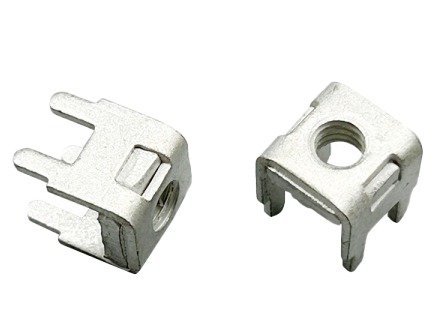
At the material level, a high - conductivity base material is fundamental. Taking TELIAN's TLE44103 terminal as an example, its conductive body is made of high - purity H62 brass. Through precision forging, the cross - sectional area for current transmission is maximized, and the contact resistance is stably controlled below 3mΩ. The multi - layer tin - plating on the surface not only improves anti - oxidation and salt - fog resistance but also effectively suppresses temperature rise under high - current working conditions. Measured data shows that when this terminal works continuously for 1 hour under a rated current of 70A, the temperature rise is only 28K, far lower than the industry - average safety threshold of 45K. The insulating housing is made of UL94 V - 0 flame - retardant PA66 engineering plastics, which can withstand a high voltage of 4kV and maintain structural stability in extreme environments from - 40°C to 125°C, fundamentally avoiding safety hazards such as short - circuits and arcing.
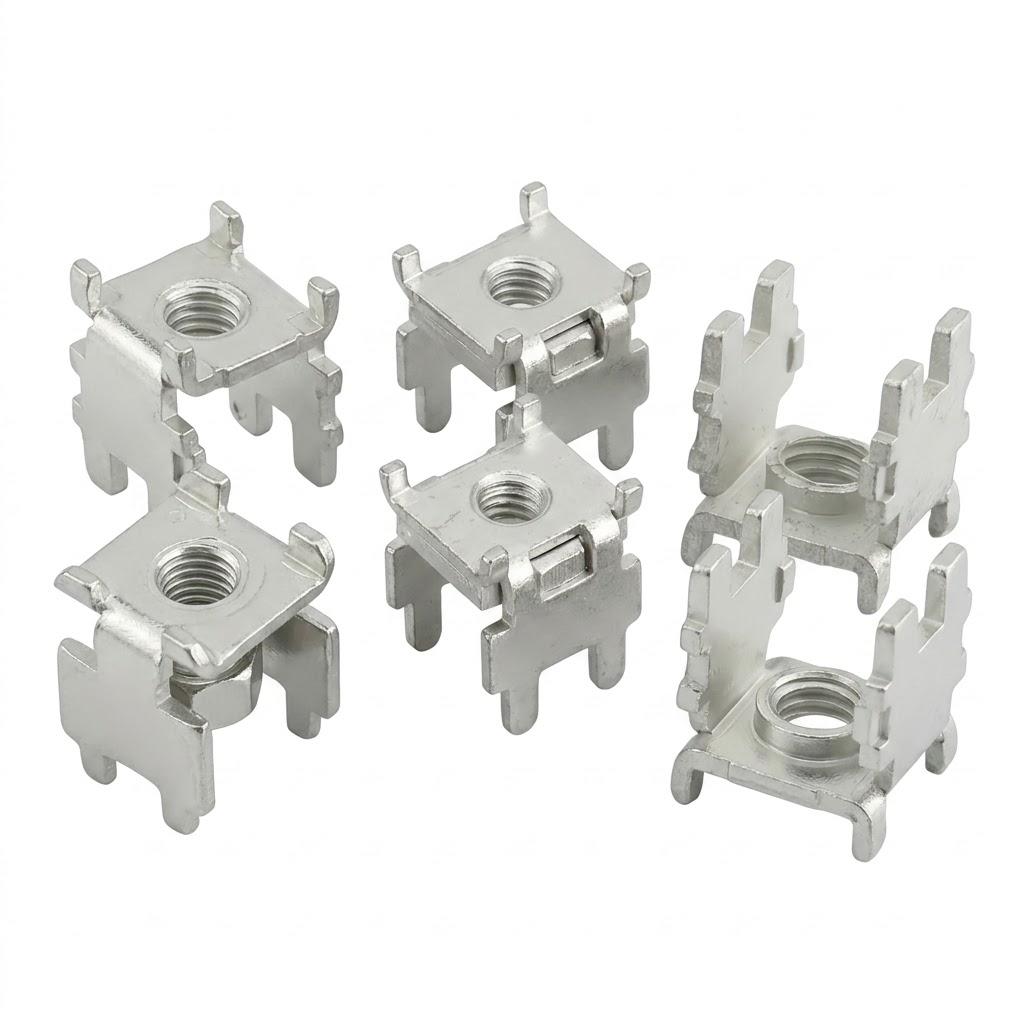
At the structural level, the soldering - fixed method completely solves the “loosening” problem. Different from plug - in terminals that rely on spring contacts, PCB solder terminals are wave - soldered or reflow - soldered through pins passing through the PCB via holes, forming a rigid physical connection. In a vibration test of 5Hz - 150Hz, the contact resistance fluctuation is still less than 10mΩ. At the same time, the compact design enables the terminals to achieve high - density layout in a very small space. The size of the TLE44103 is only 11.1×6×9mm, 30% smaller than similar products, perfectly adapting to the compact space of the BMS main control board. This allows the high - current circuit and the signal circuit to be layered for layout, avoiding electromagnetic interference.
III. Practical Verification: Application Cases from BMS to Energy - Storage Cabinets
In the BMS project of a certain new - energy vehicle manufacturer, engineers faced the dual dilemmas of “insufficient space + high - current temperature rise”. Traditional terminals were too large in size, resulting in crowded PCB wiring, and the temperature rise under high - current conditions could not meet the automotive - grade requirements. After introducing TELIAN's PCB solder terminals, not only was 30% of the installation space saved, but also during the 70A charging and discharging test, the temperature rise was controlled at 28K, and it successfully passed 2000 temperature - cycle and vibration tests. This solution not only reduced the manufacturing cost of the BMS but also increased the safety redundancy of the battery system.
In the application of commercial and industrial energy - storage cabinets, the value of PCB solder terminals is even more prominent. For a 1MWh energy - storage cabinet of an energy - storage enterprise, it is necessary to transmit the current of the battery cluster to the PCS. The traditional busbar connection not only takes up a lot of space but also has problems such as complex installation and difficult maintenance. After using TELIAN's high - current PCB solder terminals, the installation time was reduced by 50%, and through the optimized heat - dissipation structure, the temperature rise under a 150A current was controlled at 32K, ensuring the stability of the energy - storage system during full - load operation. When maintenance personnel replace cables, they only need to loosen the screws to operate, without having to desolder the entire terminal, greatly reducing the operation and maintenance costs.
In the field of industrial power supplies, a frequency - converter manufacturer once had a high product failure rate due to terminal temperature - rise problems. After changing to PCB solder terminals, the temperature rise of its 50A power circuit decreased from 52K to 29K, and the continuous operation time of the equipment increased by 3 times, completely solving the problem of shutdown in high - temperature environments in summer.
IV. The Rise of Domestic Brands: Brands like TELIAN Lead the Technological Breakthrough of High - Current Terminals
For a long time, the high - current PCB solder terminal market has been dominated by international brands such as Phoenix Contact and Wago. Their products are not only expensive but also have slow customized responses. With the rapid development of new energy and industrial automation, domestic manufacturers represented by TELIAN are breaking this pattern with material innovation, structural optimization, and quality - control advantages.
TELIAN's core advantage lies in its “scenario - based customization” ability. For different scenarios such as BMS, energy - storage cabinets, and industrial power supplies, it can quickly adjust the current - carrying capacity, installation method, and wire - adaptation specifications of the terminals, reducing the new product development cycle to within 9 months, much faster than the average 18 - month cycle of international brands. At the same time, its automated production line has achieved an automation rate of 70% in production, and the factory - passing rate is stably maintained at 99.98%. It not only reduces the delivery cycle to within 7 days but also has a price advantage of 30% - 40%, making high - end high - current terminals no longer “exclusively imported”.
This breakthrough is not only reflected at the technical level but also reshapes the industry's perception: Domestic terminal brands can not only meet the strict requirements of high - current scenarios but also become partners in customers' R & D and innovation through rapid response and customized services.
V. Future Outlook: The Development Direction of High - Current PCB Solder Terminals
With the popularization of 800V high - voltage platforms and megawatt - level energy - storage systems, the requirements for terminals in high - current scenarios will be further upgraded. Future PCB solder terminals will develop in three directions:
- Higher power density: Through material upgrades and structural optimization, they will carry larger currents in a smaller volume, further saving PCB space.
- Intelligent monitoring: Embedding NTC sensors or wireless communication modules to achieve real - time monitoring of temperature rise and contact resistance, providing data support for equipment operation and maintenance.
- Automotive - grade and energy - storage - grade certifications: Meeting more stringent certification standards such as AEC - Q200 and UL to adapt to the safety requirements of the automotive and energy - storage fields.
Conclusion
In the high - current era, PCB solder terminals are no longer simple “connection components” but the “core framework” supporting the safe and efficient operation of power systems. It solves the temperature - rise problem through material innovation, ensures reliable connection through soldering fixation, and adapts to space limitations through compact design, becoming an indispensable basic component in fields such as new energy and industrial automation.
From the BMS main control board to the energy - storage cabinet, from industrial power supplies to electric vehicles, every technological breakthrough of PCB solder terminals injects new impetus into the development of modern power systems. Domestic manufacturers represented by TELIAN are proving with their strength that on the track of high - current connections, Chinese brands can not only keep up but also lead the way.
Terminal Blocks: The Underestimated Core of Energy Storage Safety and Efficiency
TELIAN Terminals Build the Safety Foundation of Energy Storage Systems
Related Article