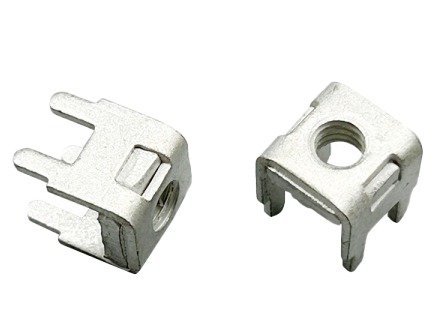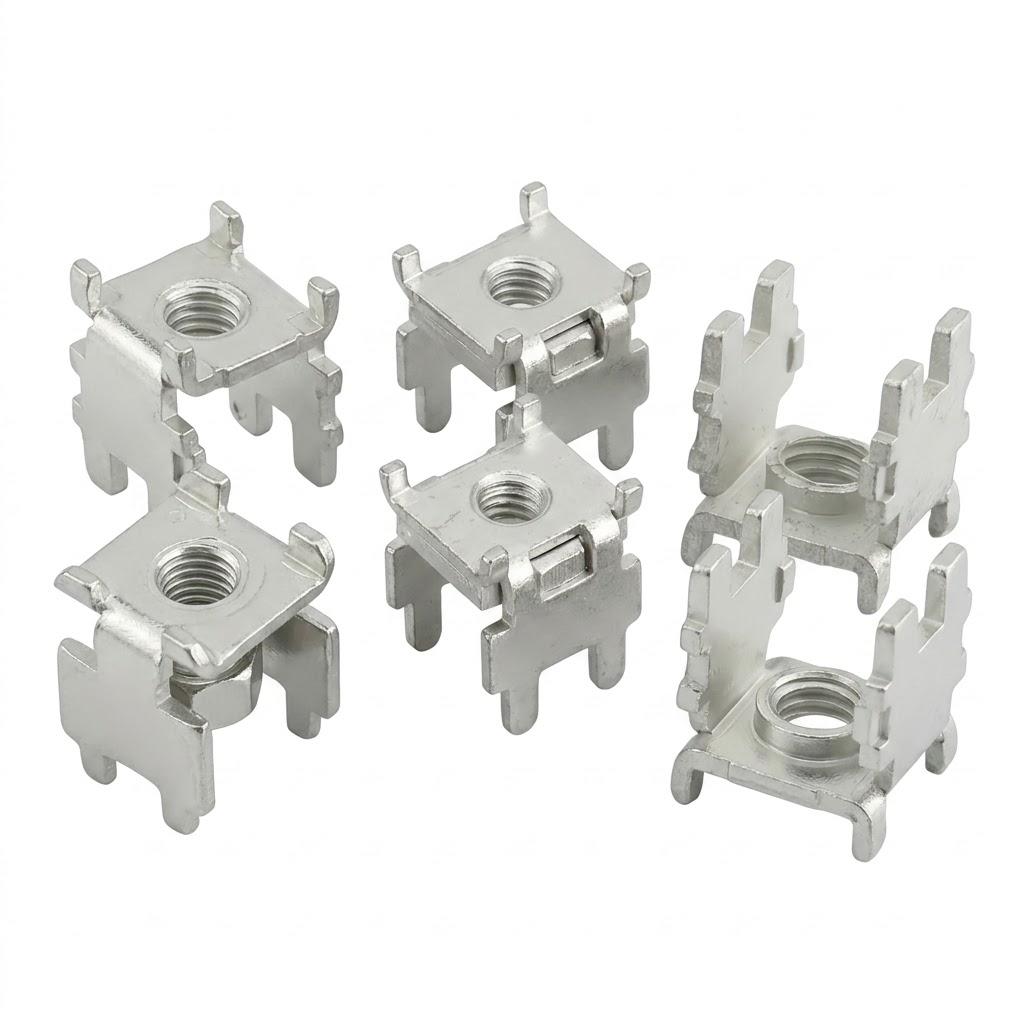
Comprehensive Explanation of Insert - type PCB Solder Terminals
Global Business Partnership
Clark
Director of Global Partnerships
Phone/WhatsApp: +86 15855488151
Official Web: www.duanzitai.com
Comprehensive Explanation of Insert - type PCB Solder Terminals: Definition, Structure, Core Advantages, Application Scenarios and Development Trends
In the circuit connection system of modern electronic devices, insert - type PCB solder terminal blocks are core basic components that connect printed circuit boards (PCBs) with external wires, components, and functional modules. They are also one of the most widely used PCB connection solutions in fields such as industrial control, consumer electronics, new energy, and automotive electronics. Characterized by through - hole soldering for fixation and quick insertion for connection, they not only solve the problem of stable soldering between the terminal and the PCB but also enable tool - free and quick connection of external cables, combining soldering reliability and ease of use. Thus, they have become the preferred connection components for small and medium - sized electronic devices and high - density PCB layouts. This article will provide a comprehensive and in - depth analysis of insert - type PCB solder terminals from aspects such as definition, structure, classification, core advantages, performance indicators, application scenarios, and industry development trends.
I. Core Definition of Insert - type PCB Solder Terminals
Insert - type PCB solder terminals, also known as through - hole PCB solder terminals, pin - type plug - in terminals, or PCB - soldered through - hole mounting terminals, refer to connector products in which the terminal body is fixed by soldering metal pins through the PCB via holes, and external wires or mating connectors can be directly inserted into the terminal cavity. The electrical connection is rapidly achieved through the internal elastic structure.
Different from screw - type PCB terminals that rely on screw locking and spring - type terminals that rely on spring crimping, the core logic of insert - type PCB solder terminals is "solder to fix the body, insert to connect the circuit": the soldering process ensures the mechanical strength and electrical stability between the terminal and the PCB, while the insertion process enables the quick disassembly and assembly of external cables. It is a perfect combination of soldering fixation and plug - in connection, and one of the "most versatile and efficient in installation" categories in PCB board - level connections.
II. Core Structure of Insert - type PCB Solder Terminals
A standard insert - type PCB solder terminal consists of four functional components, which work together to ensure the reliability and safety of the connection:
- Insulating Housing
The insulating housing is the framework of the terminal. The mainstream materials are engineering plastics such as PA66, PBT, and PET, all of which reach the UL94 V - 0 flame - retardant standard. They have the characteristics of high - temperature resistance, high - voltage resistance, strong insulation, anti - aging, and impact resistance. The housing is responsible for isolating conductive components to prevent short - circuits. At the same time, it is designed with wire insertion channels, anti - misinsertion structures, and positioning posts to avoid incorrect or offset insertion and to adapt to the insertion of wires with different diameters. - Conductive Solder Pins
These are the core components for connecting the terminal to the PCB. The material is high - purity brass or copper alloy, and the surface is treated with tin - plating or gold - plating to ensure solderability and conductivity. The pins are divided into two forms: straight pins (vertical) and bent pins (horizontal). They can pass through the pre - set via holes of the PCB and be fixed on the PCB through wave soldering, reflow soldering, or manual soldering. They not only play a mechanical fixing role but also are responsible for circuit conduction. - Elastic Contact Spring
The elastic contact spring is the "heart" of the insert - type terminal. It is usually made of high - elasticity phosphor bronze or beryllium copper and formed by precision stamping. When the wire is inserted, the spring is extruded to generate a continuous resilient force, firmly clamping the metal core of the wire to achieve a low - impedance and stable electrical connection. When pulling out, no tools are required, and it can be easily separated by relying on elastic deformation, which is the key to achieving "quick plug - in and pull - out". - Positioning and Anti - misinsertion Structure
The bottom of the terminal is designed with positioning posts and anti - misinsertion notches, which can be accurately inserted into the positioning holes of the PCB to prevent offset and rotation during soldering. Some high - end products also have a self - locking structure, which automatically locks after insertion to avoid wire loosening under vibration conditions and further improve connection reliability.
III. Mainstream Classification of Insert - type PCB Solder Terminals
According to different structures, installation methods, and electrical properties, insert - type PCB solder terminals can be divided into multiple categories to meet the needs of different scenarios:
- By Installation Direction: Vertical through - hole terminals (soldered perpendicular to the PCB), horizontal side - insertion terminals (soldered parallel to the PCB), and 90° angled terminals, which are perfectly suitable for the space layout of compact devices;
- By Number of Rows: Single - row insert terminals, multi - row (2 - 16 rows) insert terminals, with pitches covering mainstream specifications such as 2.54mm, 3.5mm, 5.0mm, and 7.5mm, supporting high - density wiring;
- By Electrical Performance: Small - signal insert terminals (suitable for sensors, communication modules, with a current ≤ 5A), high - power insert terminals (suitable for power supplies, drive boards, with a current of up to 30A - 50A);
- By Locking Method: Non - self - locking common type, spring - self - locking type. The self - locking type is more suitable for vibration scenarios such as in - vehicle and industrial control.
IV. Core Advantages of Insert - type PCB Solder Terminals
The reason why insert - type PCB solder terminals have become the mainstream in the industry lies in their comprehensive advantages of stable soldering, fast plug - in and pull - out, small size, and low cost, which are specifically reflected in eight aspects:
High Mechanical Strength
The pins are soldered through the PCB via holes, which is a rigid physical connection. The bonding strength between the terminal and the PCB is much higher than that of surface - mounted terminals.
Tool-free Wiring
The assembly efficiency of the production line is increased by more than 50% compared with screw - type terminals. No tools such as screwdrivers are required.
- Small Size, Suitable for High - Density PCBs: The terminal adopts a compact structure design, with a minimum pitch of only 2.54mm.
- Stable Electrical Performance, Low Transmission Loss: Stable contact resistance in the mΩ level. The withstand voltage can reach 1.5kV - 3kV.
- Anti - misinsertion, High Safety in Use: Structurally prevent wires from being inserted incorrectly and terminals from being installed wrongly.
- Strong Wire Compatibility, High Versatility: Adapted to various wires such as single - core rigid wires and stranded flexible wires.
- Suitable for Automated Production, Friendly to Mass Production: Mass - production consistency is high, and the unit cost is much lower than that of imported high - end terminals.
- Reusable, Low Lifecycle Cost: The terminal supports hundreds of repeated insertions and extractions.
V. Core Application Scenarios
With its comprehensive advantages, insert - type PCB solder terminals have penetrated the entire industrial chain of electronics manufacturing. The core application scenarios include:
- Consumer Electronics and Small Home Appliances: Control boards of power adapters, LED drivers, rice cookers, humidifiers, etc., focusing on low cost and fast assembly;
- Industrial Control Field: PLC modules, sensors, small - sized frequency converters, industrial control acquisition boards, relying on their vibration - resistant and stable characteristics;
- New Energy Industry: Micro - energy storage modules, BMS sampling boards, photovoltaic micro - inverters, in - vehicle low - voltage controllers;
- Automotive Electronics: In - vehicle interior electronics, sensors, headlight control boards, meeting the temperature - resistant and vibration - resistant requirements of automotive standards;
- Lighting and Security: LED lamp boards, landscape lighting drivers, surveillance cameras, communication modules.
VI. Industry Development Trends
With the development of electronic devices towards miniaturization, high - power, and automotive - grade directions, insert - type PCB solder terminals are also continuously evolving: First, miniaturization and high - density, with smaller pitches and thinner volumes, suitable for wearable and portable devices; second, high - current, breaking through the power - carrying capacity of over 50A and extending to the field of new - energy power terminals; third, automotive - grade upgrade, meeting the AEC - Q200 certification, suitable for automotive high - voltage and low - voltage connections; fourth, environmental protection, using halogen - free and high - temperature - resistant environmentally friendly materials, in line with global green manufacturing standards.
VII. Summary
Insert - type PCB solder terminals are PCB connection devices that highly balance soldering reliability, plug - in and pull - out convenience, and space economy. With a simple structure, they solve the core pain points of circuit connections. They are not only the "basic connection components" of small and medium - sized electronic devices but also the "key adaptors" for high - density PCB layouts.
Against the backdrop of the rapid rise of domestic connector technology, brands represented by TELIAN have achieved a full - scale benchmarking with international brands in terms of the materials, precision, and stability of insert - type PCB solder terminals, breaking the monopoly of the high - end market. For electronic engineers, insert - type PCB solder terminals are no longer simple auxiliary materials but core components that ensure equipment stability, improve production efficiency, and control R & D costs. Their core position in the field of electronics manufacturing will continue to be consolidated with the development of industry intelligence and miniaturization.
TELIAN Terminals Build the Safety Foundation of Energy Storage Systems
The Leading and Promising Steady Player in the Terminal Block Industry
Related Article