
What Is a Terminal Block Your Easy Guide
author: clark
2026-04-25
Whether you are facing a "mission impossible" involving high-torque requirements and compact PCB designs, or seeking a reliable strategic partner for global new energy projects, Teliang’s technical team is ready to provide you with precision-engineered terminal blocks and customized solutions.
Connect with our Technical Sales Expert:
-
Contact Person: Clark (Technical Sales Manager)
-
Mobile/WhatsApp: +86 15855488151
-
Email: lihelong@telian.cn
-
Official Website: www.duanzitai.com
-
Service Philosophy: Customer problems are our innovation propositions.
.
What Is a Terminal Block? Your No-BS, Easy Guide (With Real-World Solutions From Telian)
Let’s keep it real: Most of us use gadgets, machines, solar inverters, or energy storage systems every single day—without ever stopping to ask,
“What holds all the wiring together safely?”
The answer is almost always a terminal block. These small, modular connectors are the unsung heroes of every electrical and electronic system.
If you’ve recently walked the 2026 Canton Fair, you’ve seen the trend firsthand: Smart tech dominates Hall A, and circuit connection accessories are exploding in demand among BRICS and Asian buyers—especially from India, where the terminal block market is growing fast for new energy.

Today, we’re breaking down what a terminal block is, how it works, what types exist, and why Dongguan Telian Electronics Co., Ltd. (//www.duanzitai.com) has become one of the most trusted names for industrial, new energy, and energy storage applications—even without exhibiting at this year’s fair.
What Is a Terminal Block, Exactly? (Simple Version)
Let’s cut through the technical noise.

A terminal block (also called a terminal strip or connection terminal) is a modular, insulated electrical component that safely joins two or more wires—or connects wires to a PCB or power system—in a neat, stable, and secure way.
- Stops wires from touching each other and causing short circuits
- Keeps connections tight even under vibration, heat, or humidity
- Lets technicians install, maintain, or replace wiring without chaos
- Carries power or signals reliably across device
How Do Terminal Blocks Work?
- You insert stripped wires into the designated slots of the terminal block.
- You lock them in using a screw, spring, or push-in mechanism.
- The conductive metal inside creates a low-resistance path for electricity to flow.
- The insulated plastic body keeps different circuits separated so no short-circuits happen.
- The whole assembly stays stable under heat, vibration, dust, or moisture—so your device keeps running safely.
In short: Terminal blocks turn messy, risky wiring into clean, reliable connections.
They’re non-negotiable for any system where safety, stability, and easy maintenance matter. That’s why they’re everywhere—from small PCBs to massive energy storage stations.
Main Types of Terminal Blocks (From Telian’s Full Product Lineup)
Not all terminal blocks are the same. Different jobs need different designs.
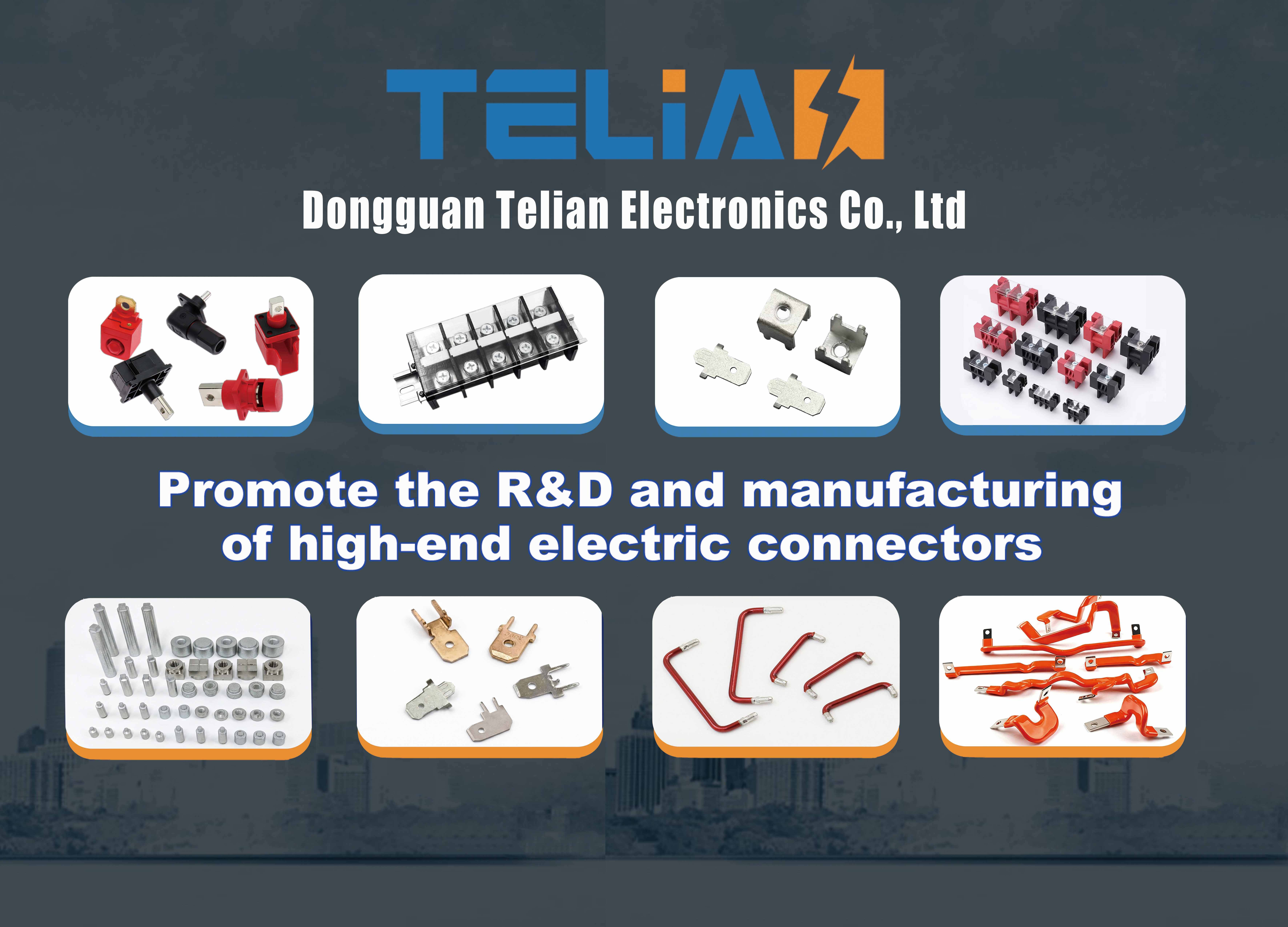
Dongguan Telian Electronics makes more than 3,000 terminal block products for nearly every industrial and new-energy scenario. Below are the most popular types you’ll find on //www.duanzitai.com:
1. PCB Screw Terminals
These are made specifically for printed circuit boards (PCBs). They use screw clamping to lock wires securely, with excellent material toughness, strong pressure resistance, and great corrosion resistance—perfect for control boards, power supplies, and automation equipment.
2. Energy Storage Terminals
Built specifically for energy storage systems (ESS) and BMS (Battery Management Systems). They handle high current, high voltage, and harsh working environments while staying safe and stable.
3. Barrier / Fence-Type Terminal Blocks
These have physical “barriers” between each circuit to prevent cross-contact and short circuits. Widely used in inverters, power distribution, and industrial control.
4. High-Current Fence-Type Terminals
Engineered for heavy-duty power transmission. They carry large currents safely and are often used in energy storage, industrial power units, and high-load equipment.
5. PCB Solder Terminals
Designed to be soldered directly onto PCBs for a permanent, rigid connection. Ideal for compact devices where stability is critical.
6. Feed-Through / Through-Wall / Through-Type Terminals
These pass wires through panels or enclosures, keeping internal and external circuits separated while maintaining a strong connection.
7. DIN Rail Terminal Blocks
Snap onto standard DIN rails inside control cabinets. Super modular, expandable, and widely used in industrial automation systems.
Every type above is built with consistency, durability, and compliance in mind.
What Makes a Good Terminal Block? (Telian’s Quality Standards)
Cheap terminal blocks fail. Good ones last for years.
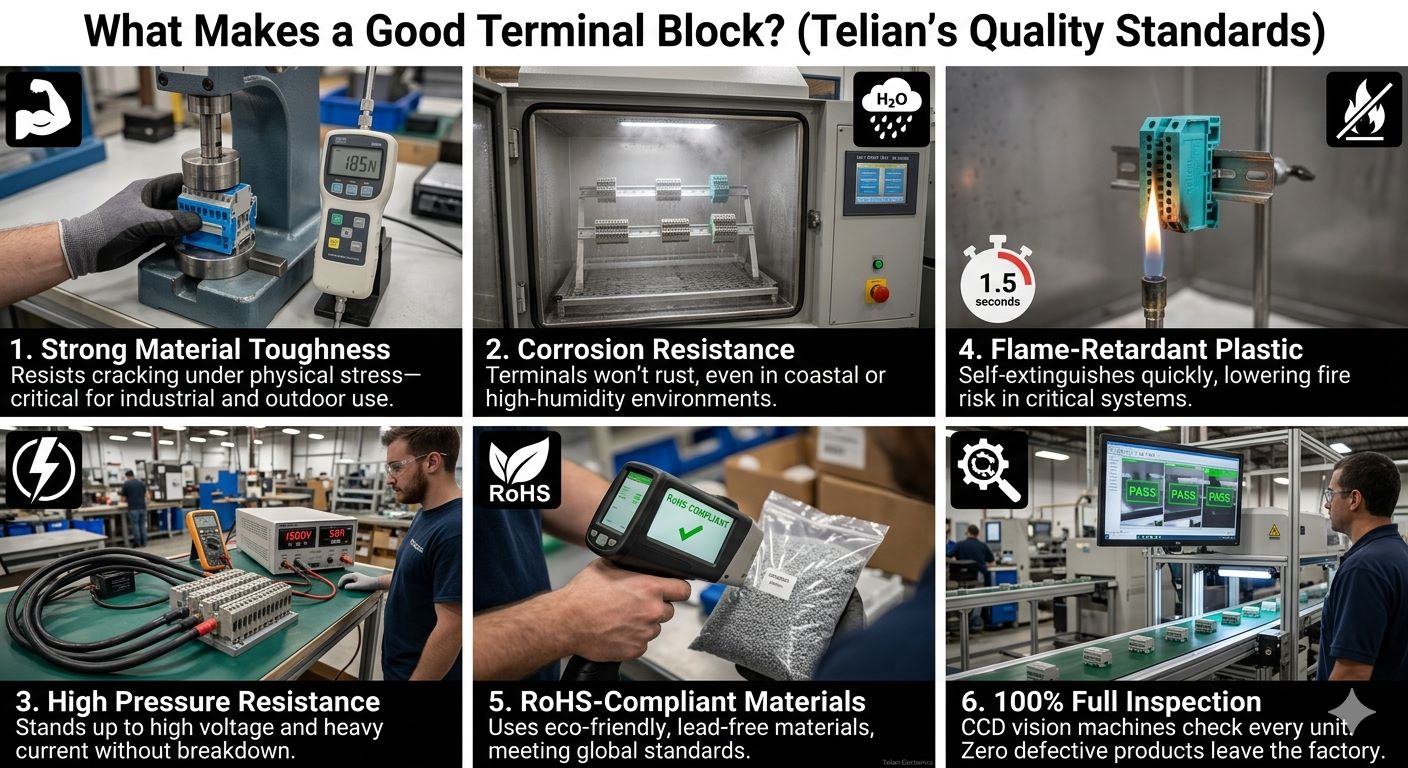
From Telian’s design and manufacturing philosophy, here are the non-negotiable features of a reliable terminal block:
✅ Strong Material Toughness
The plastic housing isn’t brittle. It resists cracking under pressure or physical stress—critical for industrial and outdoor use.
✅ Corrosion Resistance
Especially important for coastal, high-humidity, or harsh environments (like India’s climate or southern China’s coastal areas). Terminals won’t rust or degrade quickly.
✅ High Pressure Resistance
Stands up to high voltage and heavy current without breaking down or overheating.
✅ RoHS-Compliant Materials
All Telian terminal blocks use eco-friendly, RoHS-certified materials—free of hazardous substances like lead, cadmium, or mercury. This meets global export standards.
✅ Flame-Retardant Plastic (Non-PCB Types)
Plastic parts (excluding PCB terminals) pass strict flame-retardant tests. They self-extinguish quickly and lower fire risk—essential for new energy and industrial systems.
✅ 100% Full Inspection
Telian uses CCD vision inspection machines to check every single product. Zero defective units leave the factory.
These aren’t just “features”—they’re promises for safety and long-term performance.
Who Is Dongguan Telian Electronics?
If you’re in the new energy, industrial control, or inverter business in South China, you’ve almost certainly heard of Dongguan Telian Electronics Co., Ltd. (//www.duanzitai.com).
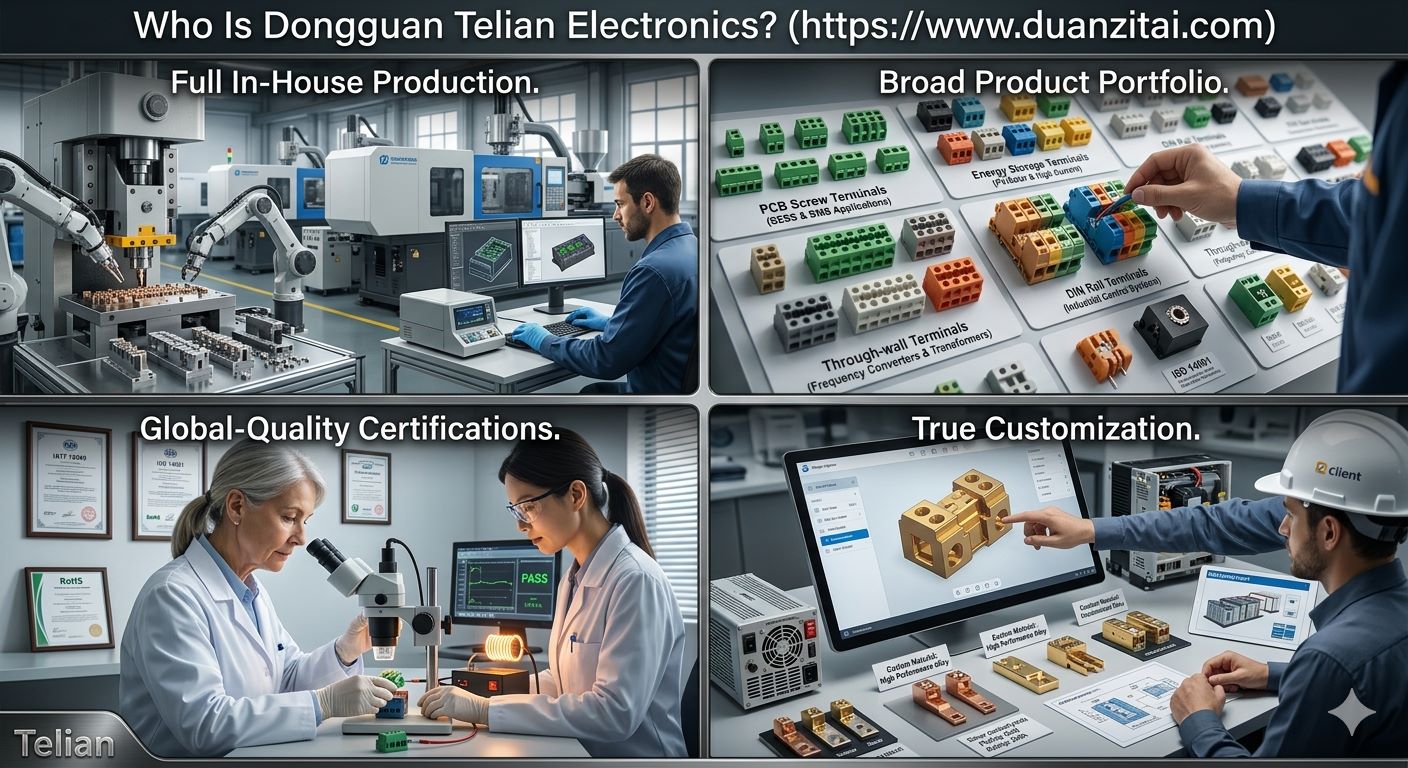
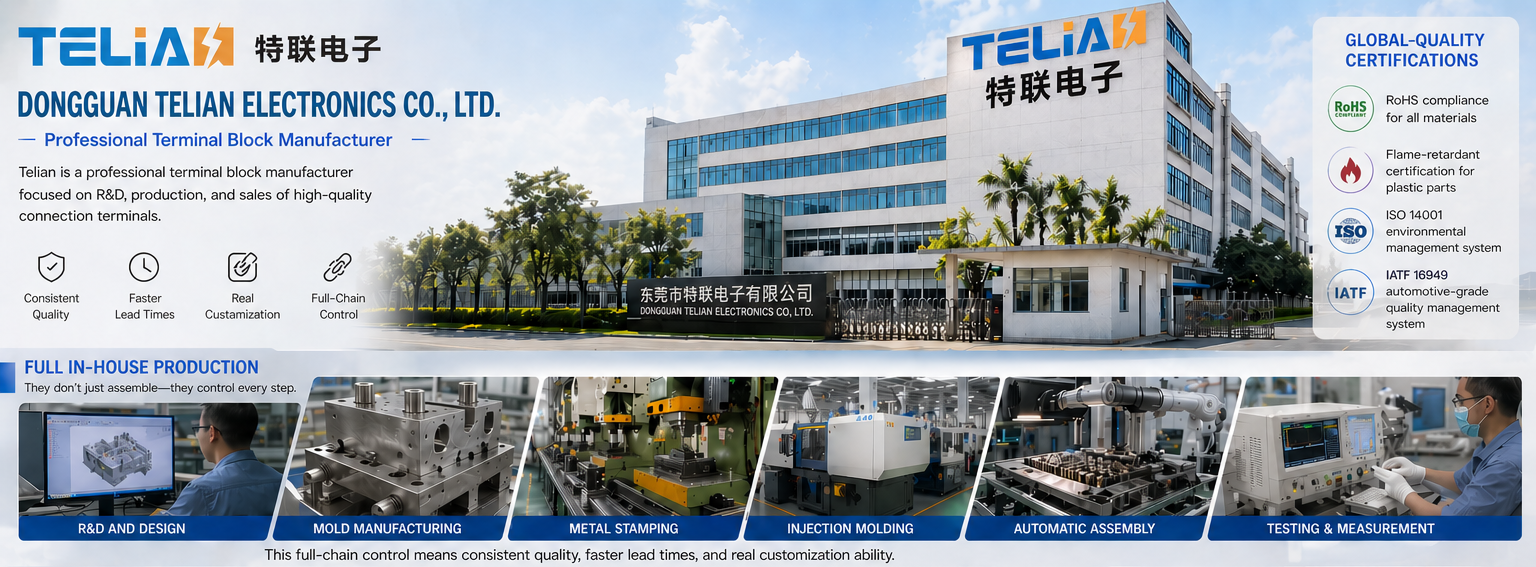
Telian is a professional terminal block manufacturer focused on R&D, production, and sales of high-quality connection terminals. What makes them different?
🏭 Full In-House Production
They don’t just assemble—they control every step:
- Independent product R&D and design
- In-house mold manufacturing
- High-precision metal stamping
- Plastic injection molding
- Automatic product assembly
- Advanced testing and measurement equipment
This full-chain control means consistent quality, faster lead times, and real customization ability.
📊 Broad Product Portfolio
Over 3,000 terminal block solutions, including:
- PCB screw terminals
- Energy storage terminals
- Barrier / high-current terminals
- PCB solder terminals
- Feed-through / through-wall terminals
- Pluggable & DIN rail terminals
Used in:
- Industrial control systems
- Frequency converters
- Transformers
- New energy (PV, solar)
- Energy storage (BESS, BMS)
- Industrial automation equipment
- Servo control systems
- Switching power supplies
🌏 Global-Quality Certifications
Telian’s factory and products meet strict international standards:
- RoHS compliance for all materials
- Flame-retardant certification for plastic parts
- ISO 14001 environmental management system
- IATF 16949 automotive-grade quality management system
These certifications aren’t just papers—they mean Telian terminals fit for high-end, high-reliability global markets.
🛠️ True Customization
One of Telian’s biggest advantages is flexible customization:
- Custom materials: Choose copper, brass, or high-performance alloys based on conductivity and environment
- Custom current ratings: From small-signal 5A up to high-power 300A+
- Custom plating: Tin, silver, or gold plating for lower resistance, longer life, or better corrosion resistance
Standard parts don’t always fit. Telian builds terminals for your exact project.
Where Are Terminal Blocks Used? (Real-World Examples)
Terminal blocks aren’t just “parts”—they enable entire industries. Here’s where you’ll find them working every day:
☀️ New Energy & Photovoltaics (PV)
Solar inverters, combiner boxes, and panel arrays rely on terminal blocks for stable, high-voltage connections. Companies in Shenzhen and Guangzhou trust Telian for their PV systems.
🔋 Energy Storage (BESS & BMS)
Battery energy storage systems need tough, high-current terminals that can handle charge/discharge cycles, heat, and vibration. Telian’s energy storage terminals are widely used in Guangzhou and South China storage projects.
⚙️ Industrial Automation & Control
PLCs, motors, sensors, and control cabinets use terminal blocks to keep wiring organized and reliable.
🔌 Frequency Converters & Power Supplies
These devices need stable connections to avoid failure and energy loss.
🚗 Automated & High-Tech Equipment
As smart tech becomes mainstream (as seen at the 2026 Canton Fair), terminal blocks are essential for robotics, AI equipment, and next-gen machinery.
The global shift toward high-end, tech-intensive exports from China means demand for reliable terminal blocks will only keep growing—especially in emerging markets like India, where buyers are extremely optimistic about this category.
Why Choose Telian Terminal Blocks?
You might be asking: There are hundreds of terminal makers—why Telian?
Here’s what makes them stand out:
-
Proven in China’s New Energy HubTelian already holds strong market share in South China. Many top PV, energy storage, and inverter companies in Shenzhen and Guangzhou use Telian terminals daily.
-
Built for Emerging MarketsTheir corrosion-resistant, high-temperature, and high-current designs match the needs of markets like India—where climate and infrastructure demand extra durability.
-
No Compromise on QualityIn-house production + 100% CCD inspection + global certifications = zero shortcuts.
-
True CustomizationMaterial, current, plating, pin count—they build what you need, not just what’s on the shelf.
-
Export-ReadyRoHS, flame-retardant, and automotive-grade quality mean Telian terminals fit global markets seamlessly.
Even without attending the 2026 Canton Fair, Telian remains a top choice for international buyers looking for stable, custom, high-quality terminal block solutions.
Wrapping Up: What Is a Terminal Block, and Why Should You Care?
Let’s recap in one sentence:A terminal block is a small, modular, insulated connector that safely organizes and secures electrical wiring—and it’s absolutely critical for every device, machine, or energy system you rely on.
Without reliable terminal blocks:
- Solar systems fail
- Energy storage units become unsafe
- Industrial machines break down
- PCBs and control systems short out
In a world moving toward smart manufacturing, new energy, and high-tech exports, terminal blocks aren’t just “small parts”—they’re foundational.
If you’re looking for stable, customizable, export-grade terminal blocks for PV, energy storage, inverters, PCBs, or industrial use, look no further than Dongguan Telian Electronics Co., Ltd.
Check their full product range and customization capabilities on their official website:🔗 //www.duanzitai.com
Whether you’re sourcing for India’s booming new energy market, South China’s inverter industry, or global industrial projects, Telian’s terminals are built to perform—safely, consistently, and for the long run.
Thanks for reading, and next time you plug in a device or see a solar inverter, you’ll know exactly what’s keeping all those wires safe and sound: a humble, high-performance terminal block.
How to Use a Terminal Block With Real Market Insights Telian Solutions
Canton Fair 2026 High-Tech Exports Shine
Related Article
In industrial electrical systems, battery storage, and automotive wiring, connector terminal pins are the unsung backbone of power and signal transmission.
how to remove connector terminal pins
olar and energy storage inverters are the core equipment of the new energy industry, responsible for converting DC power generated by photovoltaic panels and lithium battery packs into usable AC power.
The Indispensable Core Partner of Solar