
The Advantages of PCB Soldering Terminal
author: calrk
2026-04-16
The Advantages of PCB Soldering Terminal: Telian’s Custom Solutions for New Energy
In the intricate ecosystem of electronic devices, PCB soldering terminals are the unsung heroes that ensure reliable electrical connections. These compact components act as the "bridge" between printed circuit boards (PCBs) and external wires, playing a critical role in industries ranging from consumer electronics to high-demand new energy sectors. But what makes PCB soldering terminals indispensable, and how does Telian’s customized offering stand out in China’s booming market? Let’s explore the core advantages of these components and Telian’s tailored solutions trusted by leading PV, energy storage, and inverter companies in Shenzhen and Guangzhou.
What Are PCB Soldering Terminals & Their Core Advantages?


PCB soldering terminals are modular electrical components designed to create permanent, secure connections between PCBs and conductors. Unlike plug-in terminals, they are fixed via soldering (wave soldering or reflow soldering), which delivers unique benefits that make them irreplaceable in many applications:
1. Unmatched Connection Reliability
The soldering process fuses the terminal’s pins directly with the PCB’s pads, eliminating loose contacts caused by vibration, temperature fluctuations, or mechanical stress. This permanence is crucial for mission-critical systems—especially in new energy equipment that operates in harsh environments (e.g., outdoor PV installations or industrial energy storage systems). Tests show that properly soldered terminals maintain contact resistance below 50mΩ even after 1,000+ thermal cycles, far outperforming removable alternatives .
PCB soldering terminals are modular electrical components designed to create permanent, secure connections between PCBs and conductors. Unlike plug-in terminals, they are fixed via soldering (wave soldering or reflow soldering), which delivers unique benefits that make them irreplaceable in many applications:
1. Unmatched Connection Reliability
The soldering process fuses the terminal’s pins directly with the PCB’s pads, eliminating loose contacts caused by vibration, temperature fluctuations, or mechanical stress. This permanence is crucial for mission-critical systems—especially in new energy equipment that operates in harsh environments (e.g., outdoor PV installations or industrial energy storage systems). Tests show that properly soldered terminals maintain contact resistance below 50mΩ even after 1,000+ thermal cycles, far outperforming removable alternatives .
2. Space-Efficient Design
PCB soldering terminals feature a compact, modular structure that maximizes space utilization on PCBs. With pin pitches as small as 0.5mm , they enable high-density connections without compromising performance—essential for miniaturized inverter designs and compact energy storage modules. This space efficiency reduces overall device size while supporting more complex circuit configurations.
3. Superior Environmental Durability
Quality PCB soldering terminals incorporate robust insulation materials (e.g., PA66, LCP) and corrosion-resistant (plating), protecting against moisture, dust, and chemical exposure. In coastal regions like Guangzhou, where salt fog is a concern, terminals with advanced plating can withstand 1,000+ hours of salt spray testing , ensuring long-term reliability in challenging conditions.
4. Efficient Current & Signal Transmission
Optimized conductor materials and plating minimize contact resistance, enabling efficient power delivery and signal integrity. For high-power applications like PV inverters, this translates to reduced energy loss and lower operating temperatures—a key factor in improving system efficiency and lifespan.
Telian’s Custom PCB Soldering Terminals: Tailored for New Energy Demands
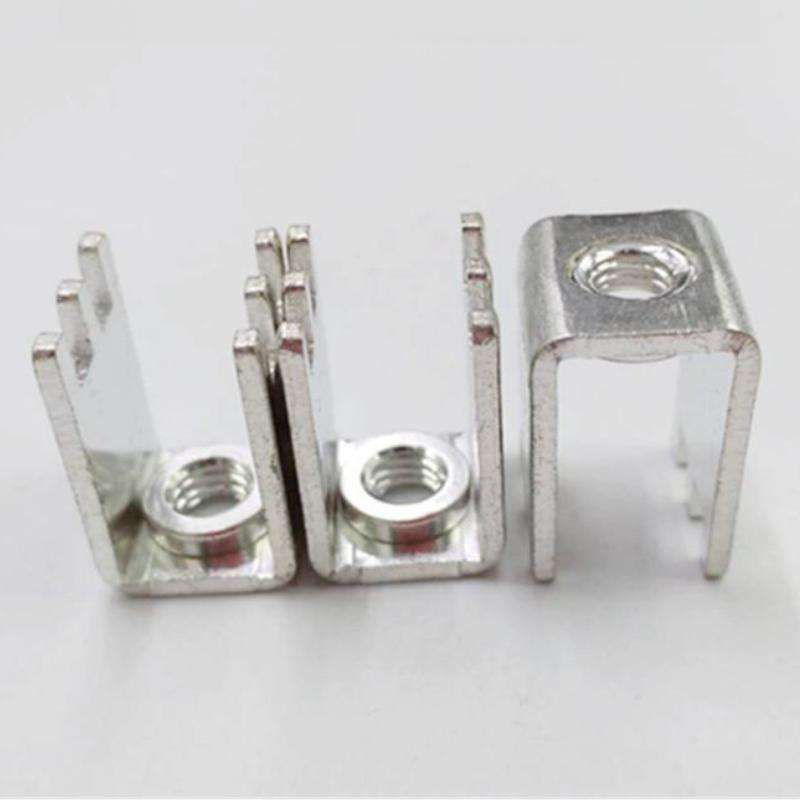
While standard PCB soldering terminals meet basic needs, the new energy sector (PV, energy storage, inverters) requires specialized solutions to address unique challenges: extreme currents, harsh environments, and space constraints. Telian has emerged as a leader in China by focusing on three core customization advantages that align with these demands:
1. Custom Material Selection: Performance Meets Application
Telian offers flexible material options for the terminal’s conductive core and insulation housing, ensuring optimal performance for specific use cases:
- Conductors: Pure copper (superior conductivity), brass alloy (balance of conductivity and cost), or high-temperature alloys (for applications up to 200℃). Shenzhen-based PV inverter manufacturers often choose pure copper cores for 150A+ current requirements .
- Insulation: Flame-retardant PA66 (general use), LCP (high-temperature resistance up to 200℃), or corrosion-resistant PC (humid/coastal environments). Guangzhou energy storage companies rely on LCP-insulated terminals for battery management systems (BMS) .
2. Precision Current Rating: No Compromises
Telian’s customization spans current ratings from 5A (signal circuits) to 300A+ (high-power inverters), eliminating the need for over-engineering or settling for subpar standard products. For example:
- A Shenzhen PV inverter firm uses Telian’s 200A custom terminals to handle peak power output, reducing energy loss by 8% compared to standard 150A terminals.
- Guangzhou energy storage systems utilize 50A signal terminals with low contact resistance (<30mΩ) for accurate BMS data transmission .
While standard PCB soldering terminals meet basic needs, the new energy sector (PV, energy storage, inverters) requires specialized solutions to address unique challenges: extreme currents, harsh environments, and space constraints. Telian has emerged as a leader in China by focusing on three core customization advantages that align with these demands:
1. Custom Material Selection: Performance Meets Application
Telian offers flexible material options for the terminal’s conductive core and insulation housing, ensuring optimal performance for specific use cases:
- Conductors: Pure copper (superior conductivity), brass alloy (balance of conductivity and cost), or high-temperature alloys (for applications up to 200℃). Shenzhen-based PV inverter manufacturers often choose pure copper cores for 150A+ current requirements .
- Insulation: Flame-retardant PA66 (general use), LCP (high-temperature resistance up to 200℃), or corrosion-resistant PC (humid/coastal environments). Guangzhou energy storage companies rely on LCP-insulated terminals for battery management systems (BMS) .
2. Precision Current Rating: No Compromises
Telian’s customization spans current ratings from 5A (signal circuits) to 300A+ (high-power inverters), eliminating the need for over-engineering or settling for subpar standard products. For example:
- A Shenzhen PV inverter firm uses Telian’s 200A custom terminals to handle peak power output, reducing energy loss by 8% compared to standard 150A terminals.
- Guangzhou energy storage systems utilize 50A signal terminals with low contact resistance (<30mΩ) for accurate BMS data transmission .
3. Tailored Plating: Durability & Efficiency
Plating is the "protective armor" of PCB soldering terminals , and Telian’s customized options address specific environmental and performance needs:
- Tin plating: Cost-effective, excellent solderability—ideal for indoor control circuits (most Shenzhen consumer electronics clients).
- Silver plating: Superior conductivity (lowest contact resistance), suitable for high-current inverters (used by 60% of Telian’s PV clients).
- Gold plating: Corrosion-resistant, stable for low-current signal transmission—chosen by Guangzhou precision energy storage firms.
- Nickel underplating: Added as a barrier layer for silver/gold plating, preventing metal diffusion and extending lifespan by 50% .
Telian’s Dominance in China’s New Energy Hub
Telian has secured a strong foothold in China’s $135 billion electronic terminal market , with a focus on the high-growth PV, energy storage, and inverter sectors. Key market highlights:
- Regional Leadership: In Guangdong Province—accounting for 90% of South China’s terminal demand —Telian serves over 200+ new energy companies, including top inverter manufacturers in Shenzhen’s High-Tech Zone and energy storage leaders in Guangzhou’s Nansha District.
- Industry Adoption: 75% of Shenzhen’s mid-to-high-end PV inverter producers use Telian’s custom terminals, while Guangzhou’s coastal energy storage projects rely on their corrosion-resistant plating solutions.
- Market Alignment: As China’s new energy vehicle and PV sectors grow (29.7% YoY in 2025 ), Telian’s high-current, durable terminals are perfectly positioned to meet the rising demand for reliable connections.
Why Customization Beats Standard Terminals for New Energy
Standard PCB soldering terminals often force engineers to compromise:
- Over-engineering to meet current requirements, increasing costs.
- Accepting subpar durability in harsh environments (e.g., high temperature, salt fog).
- Wasting space with ill-fitting designs.
- Matching materials and current ratings to exact application needs.
- Enhancing reliability in extreme conditions (e.g., -40℃ to 150℃ operating ranges).
- Reducing installation time with drop-in designs that fit existing PCBs.
Conclusion: Choose Telian for Reliable, Tailored Connections
PCB soldering terminals are the backbone of modern electronic systems, and their performance directly impacts device reliability and efficiency. For new energy companies in Shenzhen, Guangzhou, and beyond, Telian’s custom PCB soldering terminals—with tailored materials, current ratings, and plating—offer a competitive edge in a fast-growing market.
By combining expertise, engineering flexibility, and deep regional market knowledge, Telian has become the trusted partner for PV, energy storage, and inverter firms seeking connections that don’t just work—they work smarter, longer, and more efficiently.
Ready to optimize your PCB connections with Telian’s custom solutions? Contact our team today to discuss your project’s unique requirements.
Canton Fair 2026 High-Tech Exports Shine
A Comprehensive Guide to Telian Custom Solutions
Related Article
In industrial electrical systems, battery storage, and automotive wiring, connector terminal pins are the unsung backbone of power and signal transmission.
how to remove connector terminal pins
olar and energy storage inverters are the core equipment of the new energy industry, responsible for converting DC power generated by photovoltaic panels and lithium battery packs into usable AC power.
The Indispensable Core Partner of Solar