Terminal Blocks Evolving as Critical Connectors
Terminal Blocks: Evolving as Critical Connectors – Applications, Standards & Future Trajectories
In the realm of electrical engineering and industrial connectivity, terminal blocks are far more than mere wire-jointing components—they are the foundational elements that ensure safety, efficiency, and scalability across electrical systems. Defined by the International Electrotechnical Commission (IEC) as “standardized devices for connecting two or more conductors, providing mechanical support and electrical insulation,” terminal blocks adhere to rigorous global standards (IEC 60947-7-1, UL 1059, GB/T 14048.7) to meet the diverse demands of industries ranging from renewable energy to advanced manufacturing. As technology advances, these components are undergoing a profound transformation, moving beyond passive connection to active integration in smart systems. This article delves into their multifaceted applications, compliance requirements, and future trends, offering a comprehensive overview for engineers, procurement professionals, and industry stakeholders.
I. Core Classifications & Compliance: The Foundation of Reliable Connection
Terminal blocks are classified based on their structural design, connection mechanism, and environmental resilience—each tailored to specific operational needs. Compliance with international standards is non-negotiable, as substandard terminals pose risks of overheating, short circuits, and system failures.
| Classification | Connection Mechanism | Key Compliance Features | Target Applications |
|---|---|---|---|
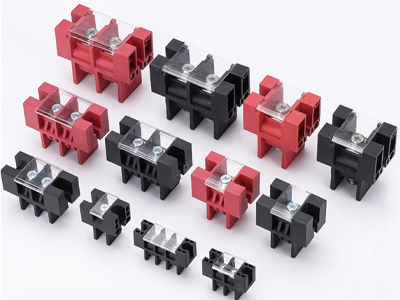
| Screw-Terminal Blocks | Threaded fastener (brass/steel) clamping | Torque resistance ≥8 N·m; contact resistance ≤0.03mΩ; UL 94 V-0 flame retardancy | Industrial control cabinets, low-voltage power distribution, DIY electronics |
| Spring-Clamp Terminal Blocks | Elastic spring-loaded clamping | Tool-free operation; vibration resistance (10G, 10–2000Hz); IEC 61238-1 certification | Renewable energy systems, rapid-assembly production lines, automotive electronics |
| High-Current Terminal Blocks | Heavy-duty copper alloy conductors | Rated current 100–600A; voltage tolerance up to 1500V DC; IP65+ protection | Energy storage systems (ESS), EV charging stations, industrial transformers |
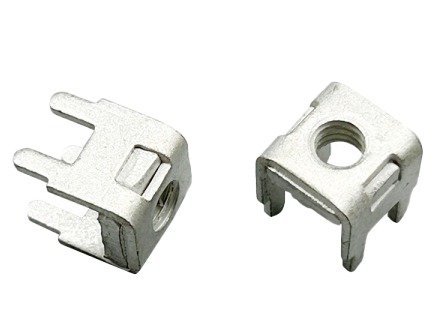
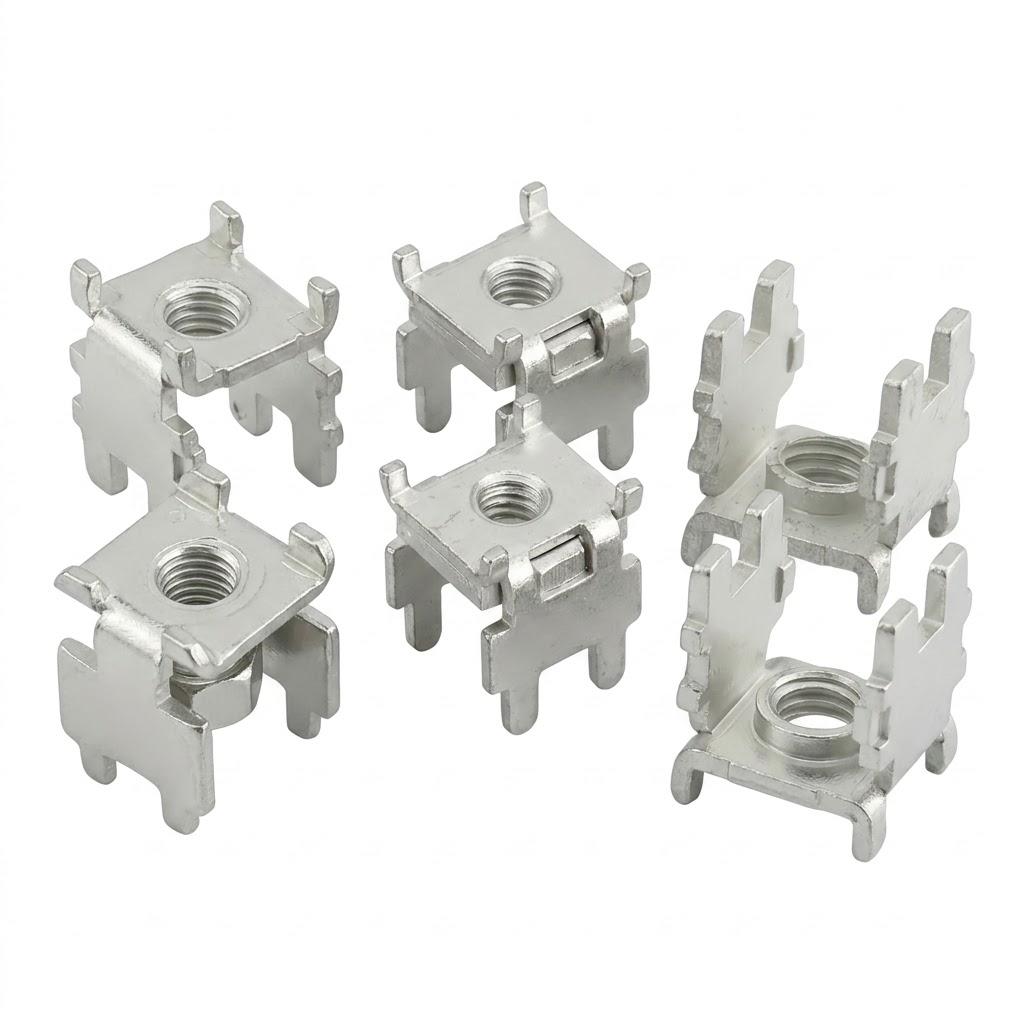
| PCB Terminal Blocks | Soldered pin/through-hole mounting | Pitch accuracy ±0.01mm; reflow soldering compatibility (260℃/10s); RoHS 3.0 compliance | Printed circuit boards, 5G base stations, medical devices |
| Waterproof Terminal Blocks | Sealed insulation housing | IP67–IP68 protection; salt spray resistance (96 hours); -40℃ to 125℃ operating range | Outdoor PV installations, marine equipment, rail transit |
Non-Negotiable Compliance Rule: For conductors ≥10mm² (multi-strand) or high-current circuits (≥50A), copper cable lugs (tube-type terminals) are mandatory per IEC 60352-2 and GB 50168. These lugs crimp the conductor into a solid contact surface, eliminating loose strands, reducing contact resistance, and ensuring compliance during project inspections—critical for industries like renewable energy and power distribution.
II. Key Application Landscapes: Powering Global Industries
Terminal blocks are ubiquitous across sectors, with their design and performance directly influencing system reliability. Below are the most impactful application areas, highlighting terminal block requirements and value propositions:
1. Renewable Energy: Driving the Carbon Neutrality Agenda
The global renewable energy market (valued at $1.3 trillion in 2023) relies heavily on terminal blocks for PV systems, wind turbines, and energy storage.
- Photovoltaic (PV) Systems: String inverters and combiner boxes use high-voltage (1500V DC) spring-clamp terminals, which reduce wiring time by 40% compared to screw terminals. Terminal blocks with IP68 protection withstand extreme temperatures (-40℃ in Nordic winters to 85℃ in Middle Eastern deserts) and UV radiation, ensuring 25-year service life—matching PV panel longevity.
- Energy Storage Systems (ESS): Large-scale ESS (e.g., grid-connected battery banks) utilize high-current terminal blocks (200–400A) with low contact resistance (.02mΩ) to minimize energy loss. Modular terminal designs enable scalable battery pack configurations, a key requirement for utility-scale projects.
- Wind Turbines: Pitch control systems and nacelle wiring demand vibration-resistant terminal blocks (compliant with IEC 60068-2-6) to withstand 5G vibrations during operation. Waterproof variants protect against moisture in offshore wind farms.
2. Industrial Automation & Smart Manufacturing
Industry 4.0’s emphasis on connectivity and data-driven operations has elevated terminal block requirements.
- PLC & Control Cabinets: DIN rail-mounted terminal blocks with clearly labeled ports organize hundreds of signal and power wires, simplifying troubleshooting and reducing downtime by 30%. High-density models (2.54mm pitch) save cabinet space, supporting compact automation setups.
- Robotics & Cobotics: Collaborative robots use pluggable terminal blocks for quick maintenance, enabling tool-free wire replacement in production lines. These terminals must meet ISO 10218 safety standards for human-robot interaction.
- Sensor Networks: Industrial IoT (IIoT) sensor arrays rely on miniature PCB terminals (1.27mm pitch) to transmit data without signal interference. Integrated surge protection (IEC 61000-4-5) shields terminals from voltage spikes in factory environments.
3. Automotive & Electric Vehicles (EVs)
The global EV market (projected to reach 35 million units by 2030) demands terminal blocks that balance high performance and compactness.
- EV Batteries: Battery management systems (BMS) use high-current terminal blocks (300–600A) to connect battery modules, with flame-retardant housings (UL 94 V-0) mitigating fire risks. Low-temperature performance (-40℃) ensures reliability in cold climates.
- Charging Infrastructure: DC fast chargers (50–350kW) require terminal blocks capable of handling 200–500A currents with minimal heat generation. Waterproof (IP67) and dustproof designs adapt to outdoor charging stations.
- Vehicle Electronics: Infotainment systems, ADAS (Advanced Driver Assistance Systems), and powertrain controls use PCB terminal blocks with EMI shielding to prevent signal interference—critical for autonomous driving functionality.
4. Building Automation & Smart Homes
The shift toward energy-efficient buildings has expanded terminal block applications in residential and commercial sectors.
- Smart Home Systems: Lighting, HVAC, and security systems use modular terminal blocks that support plug-and-play installation, enabling homeowners to expand smart networks without rewiring. Low-voltage (24V) variants ensure user safety.
- Building Management Systems (BMS): Centralized terminal boxes connect HVAC, lighting, and access control systems, facilitating remote monitoring and energy optimization. Compliance with EN 50174 ensures interoperability across European markets.
- Data Centers: Server racks and UPS (Uninterruptible Power Supply) systems use high-density terminal blocks to manage power distribution, with thermal monitoring features (integrated temperature sensors) preventing overheating in high-load environments.
5. Medical & Aerospace: Precision & Reliability at Extremes
High-stakes industries like medical devices and aerospace demand terminal blocks with zero-failure tolerance.
- Medical Equipment: MRI machines, defibrillators, and patient monitors use sterile, low-outgassing terminal blocks (compliant with ISO 13485) to avoid contamination and signal interference. Miniature designs fit into compact portable devices.
- Aerospace & Defense: Avionics systems and satellite payloads require terminal blocks that withstand extreme temperatures (-55℃ to 125℃), high pressure, and radiation. Compliance with MIL-STD-810 ensures reliability in space and airborne applications.
III. Future Trends: Transforming from Connectors to Smart Nodes
As industries embrace digitalization and sustainability, terminal blocks are evolving to meet three core demands: intelligence, miniaturization, and environmental responsibility.
1. Intelligent Terminal Blocks: Data-Driven Connectivity
The integration of sensors and communication modules is turning terminal blocks into “smart nodes” in IoT ecosystems.
- Condition Monitoring: Embedded temperature and current sensors track real-time performance, sending alerts via IO-Link or Modbus when anomalies (e.g., overheating, loose connections) are detected. This enables predictive maintenance, reducing unplanned downtime by 50% in industrial settings.
- Digital Twins: Smart terminals sync data with digital twin platforms, allowing engineers to simulate connection performance and optimize system design. This technology is already adopted in large-scale ESS and automotive manufacturing.
- Cybersecurity: Industrial terminal blocks with encrypted communication (IEC 62443) protect against cyber threats, a critical requirement for IIoT and smart grid applications.
2. Miniaturization & High-Density Integration
Device miniaturization is driving terminal blocks toward smaller footprints and higher connection density.
- Micro-Terminals: Pitch sizes as small as 0.8mm enable hundreds of connections in compact devices (e.g., wearables, miniaturized sensors). Advanced molding techniques (injection molding with ±0.005mm tolerance) ensure precision.
- Integrated Modules: Terminal blocks combined with fuses, surge protectors, or relays reduce component count and wiring complexity. For example, EV BMS use integrated terminal-fuse modules to save space in battery packs.
3. Sustainability & Environmental Compliance
Global carbon neutrality goals are reshaping material selection and manufacturing processes for terminal blocks.
- Eco-Friendly Materials: Lead-free copper alloys, recyclable PA66 insulation, and bio-based plastics replace traditional materials, complying with EU REACH and RoHS 3.0 regulations. Carbon-neutral production (using renewable energy) is becoming a competitive differentiator.
- Longevity & Recyclability: Terminal blocks designed for 20+ year service life reduce waste, while modular designs enable component recycling. Manufacturers like Telian are adopting take-back programs for end-of-life terminals.
4. Customization for Niche Applications
As industries demand tailored solutions, customization has become a key trend for terminal block manufacturing.
- Application-Specific Designs: Terminal blocks optimized for extreme environments (e.g., deep-sea exploration, desert PV) feature specialized materials (titanium conductors, silicone insulation) and configurations.
- Rapid Prototyping: 3D printing and rapid tooling enable manufacturers to deliver custom terminal blocks in weeks, not months—critical for startups and innovative projects.
Conclusion
Terminal blocks have evolved from humble wire connectors to sophisticated components that underpin the reliability and efficiency of modern electrical systems. Their diverse applications across renewable energy, industrial automation, EVs, and medical devices highlight their versatility, while compliance with global standards ensures safety and interoperability. As we move toward a more connected, sustainable future, terminal blocks will continue to innovate—integrating intelligence, shrinking in size, and embracing eco-friendly practices. For industry professionals, understanding these trends and selecting the right terminal block for each application is not just a technical decision, but a strategic one that impacts system performance, cost, and sustainability.
Whether you’re designing a utility-scale ESS, a compact medical device, or a smart factory, partnering with a trusted terminal block manufacturer (like Telian) ensures access to compliant, high-performance solutions tailored to your needs.
Clark
Director of Global Partnerships
PCB Screw Terminals Usage Advantage
how to wire the terminal block
Related Article