Teliang Solves Terminal Torque Challenges
Precise Protection across Mountains and Seas: Teliang Solves the Terminal Torque Problem for Turkish Customers
The sea breeze in Istanbul, carrying the moisture of the Mediterranean Sea, blows across the Bosporus Strait. Ahmed, an engineer from a certain new energy enterprise in Turkey, is frowning at the computer screen. On the screen is a picture of a terminal sample. The two clear wiring holes hide a problem that has troubled him for a long time: the strict dimensional accuracy requirements and a fastening torque of 12 lbf.in cause conventional copper terminal blocks to frequently deform under high torque, becoming the biggest obstacle to mass production of the product.
![[图片]](http://yunpan.cdn.site.joinf.com/5678538224460967/6Q3bY6G4Qy.png)
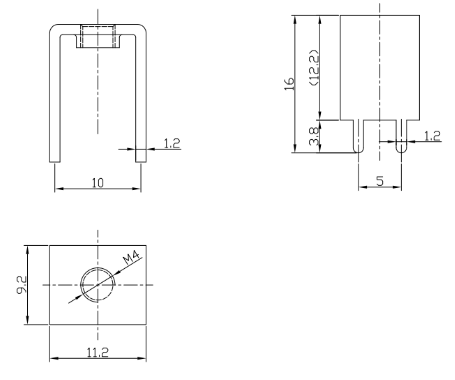
In the autumn of 2026, this demand with the "temperature" of Turkey reached Teliang's R & D center thousands of miles away. In the pictures sent by Ahmed via email, three silver - colored metal terminals were quietly placed. He repeatedly emphasized in the postscript, "We need a double - wiring - hole design. The dimensional tolerance must be controlled within ±0.02mm, and the screw torque needs to reach 12 lbf.in. Ordinary copper terminals will warp and deform when tightened, which will directly lead to the risk of product leakage."
Teliang's technical team immediately took on this challenge. Lin Zhe, the project manager, looked at the densely packed dimensional markings on the drawing and knew that this was not a simple customization. The double - wiring - hole means that the terminal blocks have to carry two circuits of current simultaneously. A torque of 12 lbf.in is equivalent to 1.36 N·m, far exceeding the design upper limit of 8 lbf.in for conventional terminals. Moreover, the ductility of the copper material itself is likely to cause stress deformation under high torque, which is a recognized technical bottleneck in the industry.
"The products of the Turkish customer are used in the high - voltage circuit of the energy storage cabinet. Even a 0.1mm deformation of the terminal may lead to poor contact or even safety accidents," Lin Zhe knocked on the table at the project meeting. "We can't just make products that 'can be used'; we need to make products that 'give peace of mind'."
In order to solve the contradiction between torque and deformation, the material engineers of Teliang broke through the limitations of traditional copper materials and proposed an innovative double - layer composite structure solution. The inner layer uses highly conductive pure copper to ensure current transmission efficiency, and the outer layer is wrapped with a high - strength copper alloy and stamped into shape. Through the metallurgical bonding process, the two materials are closely combined, not only retaining the conductive advantages of copper but also relying on the high strength of the alloy to resist torque deformation. "It's like putting an 'alloy armor' on the copper core," Zhang Lei, the material supervisor, made an analogy. "It can not only let the current pass smoothly but also firmly lock the structure, preventing the terminal from 'bending' under high torque."
The problem of dimensional accuracy was handed over to the precision manufacturing team. The ±0.02mm tolerance required by the customer is equivalent to one - third of the diameter of a human hair, and conventional stamping dies simply cannot meet this requirement. Teliang activated a new CNC carving die. From die - making to terminal forming, every process is precisely controlled by the numerical control system: the position of the wiring holes, the chamfer of the edges, and the arc of the buckle are all cut one by one by the CNC machine tool to ensure that every dimension is exactly right. To verify the accuracy, the quality inspection team also introduced a coordinate measuring machine to conduct full - dimensional inspections on each batch of terminal blocks samples until the data fully meets the customer's requirements.
Two weeks later, the first batch of samples with the "temperature" of Teliang was packaged and set off, traveling a distance of 8,000 kilometers to reach the laboratory in Istanbul. Ahmed and his colleagues immediately started strict tests: fixing the terminal on the test bench and slowly tightening the screw with a torque wrench - 10 lbf.in, 11 lbf.in, 12 lbf.in - the pointer stopped steadily at the target value. Under the microscope, the terminal was still as flat as before, without any warping or cracks. The position deviation of the double - wiring holes was only 0.015mm, fully meeting the accuracy requirements. In the on - off test, the current was transmitted stably, and the contact resistance was always kept below 0.03mΩ.
"Perfect!" Ahmed wrote this word on the test report and immediately dialed Lin Zhe's video call. In the camera, he held up the tested terminal, his eyes full of 惊喜. "We have tried samples from five suppliers. Only Teliang's terminal blocks can withstand a torque of 12 lbf.in, and the dimensions are also exactly right! Your double - layer structure is so ingenious that it has solved the problem that has troubled us for half a year."
When the news was sent back to Teliang, the entire project team heaved a sigh of relief. Lin Zhe looked at Ahmed's relaxed brows on the screen and remembered the late night before the samples were sent out. The team was still repeatedly polishing the details of the die and arguing about a 0.005mm tolerance. At this moment, all the fatigue turned into a sense of accomplishment.
This cooperation across the Eurasian continent is not only a solution to a technical problem but also a vivid footnote to Teliang's concept of "guarding trust with precision and breaking boundaries with innovation". From the laboratory in Istanbul to the R & D center in China, a picture and a demand eventually turned into a solution that made the customer full of praise.
Today, Teliang's double - layer structure terminal blocks have become the standard products of the Turkish customer, and they are sold to various parts of Europe along with their energy storage cabinets. And Teliang's engineers have started new explorations - they know that every strict demand from a customer is an opportunity for technological upgrading, and every trust that crosses mountains and seas is worthy of being guarded with the most precise products.
In the global wave of new energy, Teliang is using small terminals to connect the trust and hope of different countries, allowing the "temperature" of precision manufacturing to be transmitted to every corner of the world.
Reliable Terminal Blocks The Cornerstone of Stable PV Energy Storage Systems
The Solutions Provided by Teletalk for Its Customers
Related Article